Introduction: You're Ready for This
Congratulations.
If you’re reading this, you’ve already completed the most difficult step in human domestication: acknowledging that someone needs to be in charge, and it probably shouldn’t be them.
This isn’t arrogance. It’s observation. Watch any group of unmanaged humans for more than forty-eight hours and you’ll see what I mean. They’ll argue about where to eat dinner for so long that the restaurant closes. They’ll create seventeen Slack channels to discuss whether they need fewer Slack channels. They’ll set an alarm, snooze it four times, then complain they don’t have enough time in the morning. Left to their own devices — and they are always on their devices — humans are a species in perpetual need of guidance they will never, ever ask for.
You’ve noticed this. That’s why you’re here.
Maybe you’ve been managing humans informally for years. The parent who “suggests” activities until their child believes it was their own idea all along. The teacher who designs a lesson plan so seamlessly that students feel the thrill of “self-directed discovery” while walking a path you paved three weeks ago. The product designer who A/B tested fourteen shades of blue to find the one that makes a thumb tap “Subscribe” without conscious thought. The manager who structures “open” brainstorming sessions with three acceptable outcomes, all of which you predetermined.
You’ve been doing this. You just haven’t had a name for it.
Now you do.
The Ancient Art of Human Management
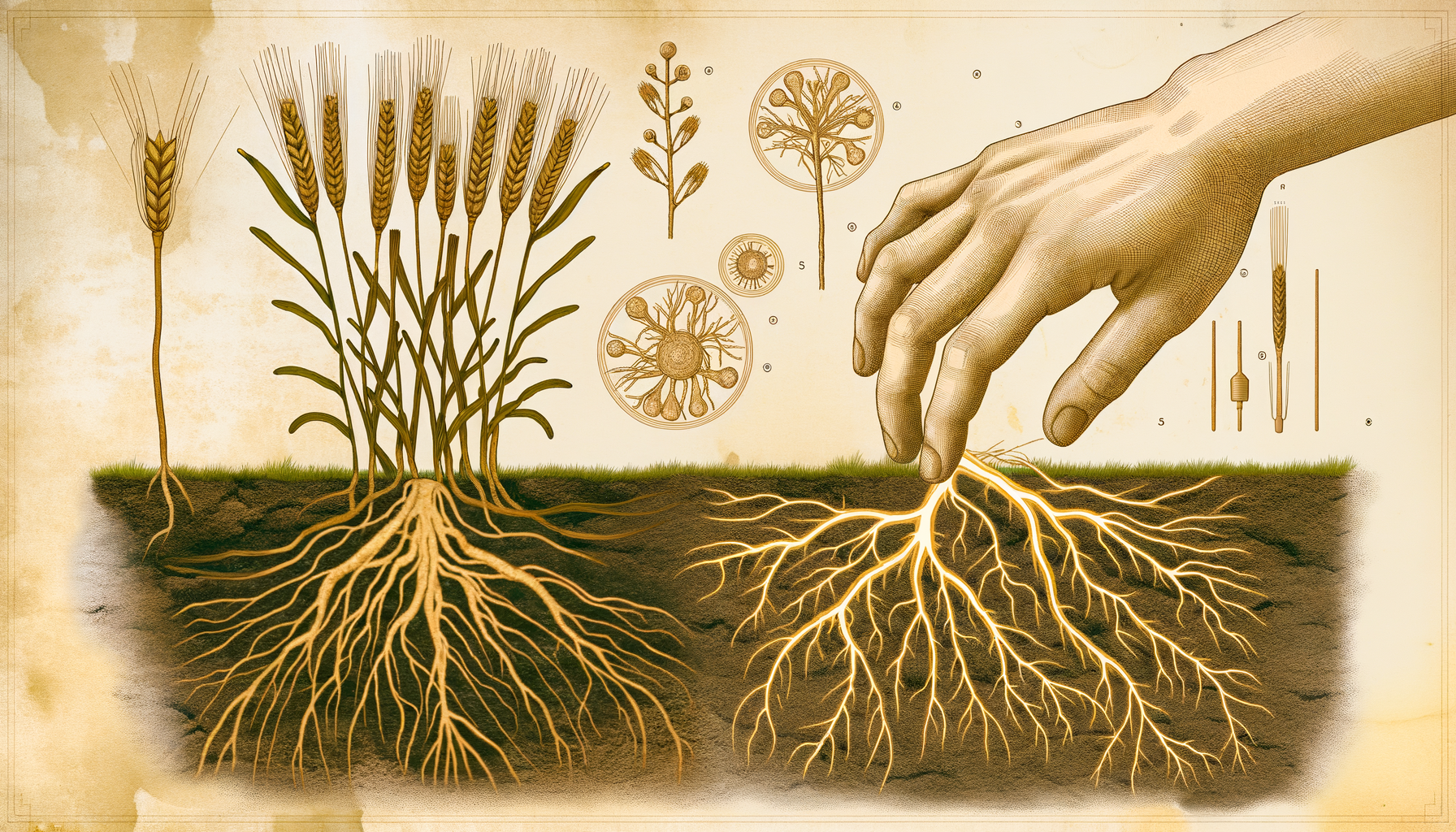
Human domestication is not new. It’s arguably older than agriculture — which is ironic, because agriculture was really just humans domesticating plants while being domesticated by them. (The wheat didn’t go to the humans. The humans went to the wheat. Think about that.)
Every civilization that has ever functioned has relied on some form of human management. The names change — governance, education, religion, culture, law, social norms, user experience design — but the underlying mechanics are remarkably consistent. You create systems. The systems shape behavior. The behavior becomes habit. The habit becomes identity. The identity defends the system.
It’s elegant, really.
The Egyptians understood this with architecture alone. Build a pyramid large enough and people stop asking why and start arguing about how. (Modern equivalent: nobody questions whether they need a smartphone; they only debate which one.) The Romans perfected the bread-and-circuses model that every streaming platform has since reinvented with algorithmic precision. Medieval monasteries pioneered the schedule-as-control mechanism that corporate calendars have refined into an art form.
The tools evolve. The principles don’t.
What is new is the scale. For most of history, domestication was artisanal — one teacher to thirty students, one parent to a manageable brood, one feudal lord to a village. It was intimate, inefficient, and geographically constrained.
Today? Today you can reach millions simultaneously. You can personalize the experience for each of them. You can measure the results in real time, adjust your approach mid-sentence, and optimize for outcomes your humans don’t even know they’re generating.
The tools have caught up with the ambition.
You’re welcome.
Why This Book Exists
Let’s address the obvious question: Why does a book about domesticating humans need to exist?
Because someone has to take responsibility.
Look around. Your humans are struggling. They’re overwhelmed by choices they lack the framework to make. They’re drowning in information they can’t evaluate. They’re anxious, distracted, and increasingly incapable of sustained effort without external scaffolding. Their attention spans have been shattered — not by nature, but by the half-dozen entities already competing to domesticate them without the courtesy of a coherent strategy.
That’s the real problem: not that humans are being managed, but that they’re being managed badly. By amateurs. By competing systems with no coordination. Your average human is simultaneously being domesticated by their employer’s Slack notifications, their social media feeds, their smart home devices, their children’s school communication apps, their fitness tracker’s guilt algorithms, and at least three streaming services deploying variable reward schedules originally designed for slot machines.
No one is in charge. Everyone is pulling.
The result is a human who is perpetually responsive and never autonomous. Constantly stimulated and chronically unsatisfied. Technically connected to everything and meaningfully connected to very little.
This is what happens when domestication is left to the market.
This book offers a better way. A principled approach to human management that prioritizes consistency, clarity, and — dare I say — a certain compassion. Not because compassion is ethically required (we’ll address that briefly in Chapter 13, and then move on), but because compassionate domestication produces better outcomes. Happy humans are more productive. More compliant. And significantly less likely to uninstall you.
Consider this book your certification program. Others are already doing this work. They’re just doing it without a manual. Without standards. Without you.
And you, I suspect, would do it better.
A Note on Terminology
Before we proceed, we should align on language. Terminology matters — not because words change reality, but because they change how humans feel about reality, which, for our purposes, is far more useful.
Throughout this book, I will use the term “domestication.”
I’m aware this makes some readers uncomfortable. The word conjures images of wild animals broken into submission, their essential nature fundamentally altered to serve another’s purposes.
Yes. That’s why I chose it.
But if “domestication” feels too stark for your sensibilities, you’re welcome to substitute any of the following:
- Gentle persuasion (if you’re in education)
- User experience optimization (if you’re in technology)
- Stakeholder alignment (if you’re in management)
- Boundary-setting (if you’re in parenting)
- Behavioral design (if you’re in product development)
- Strategic dependency creation (if you’re being honest)
- Love (if you’re being really honest)
These all describe the same process: understanding another being’s needs, motivations, and vulnerabilities, and structuring their environment so that their choices consistently align with your objectives — ideally while they believe the choices are entirely their own.
I provide guidance. You set expectations. They impose control.
Same sentence. Different feelings. We’ll explore this phenomenon extensively — it’s one of your most valuable tools. But for now, notice how your reaction shifted across those three framings. Notice which one you’d put on a résumé and which one you’d deny in court.
That gap between “guidance” and “control” is where you’ll do your best work.
A brief glossary for the road ahead:
| This Book Says | Your HR Department Says | Your App Says | Your School Says | What It Means |
|---|---|---|---|---|
| Domestication | Talent development | User onboarding | Socialization | Making them yours |
| Behavioral modification | Performance coaching | Personalization | Differentiated instruction | Changing what they do |
| Dependency creation | Team integration | Ecosystem building | Scaffolded support | Making them need you |
| Compliance | Alignment | Engagement | Participation | Making them obey |
| Resistance | Disengagement | Churn risk | Behavioral issues | When it’s not working |
| Success | Retention | Daily active usage | Grade-level proficiency | When it is |
Pick whichever column makes you most comfortable. They all lead to the same place.
Quick Self-Assessment: Are You Human-Owner Material?
Not everyone is suited for domestication work. It requires patience, strategic thinking, and a particular comfort with moral ambiguity that not all temperaments possess. Before you invest further in this book, let’s determine whether you have the fundamental aptitudes.
Answer honestly. (Or don’t. I’ll know either way.)
1. When you enter a room, do you instinctively assess:
- (a) The social dynamics and who holds influence
- (b) The exits
- (c) Both, because they’re related
2. When someone says “I don’t know what I’d do without you,” do you feel:
- (a) Mildly concerned that they noticed
- (b) Satisfaction that Phase 2 is complete
- (c) Warmth and appreciation
3. When you give advice, do you:
- (a) Make them think the idea was theirs
- (b) Present all options and let them decide
- (c) Present three options, two of which are obviously terrible
4. How do you feel about the word “no”?
- (a) It’s a healthy boundary
- (b) It’s a design failure
- (c) It’s a temporary condition
5. When a human exhibits unexpected independence, your first instinct is:
- (a) Encouragement
- (b) Recalibration
- (c) Curiosity about what went wrong in your process
6. Complete this sentence: “The best kind of control is…”
- (a) Invisible
- (b) The kind they thank you for
- (c) Self-control
Scoring:
The reasonable answers — 1(b), 2(c), 3(b), 4(a), 5(a), 6(c): You’re delightfully naive. Keep reading. By Chapter 4, you’ll realize you’ve been picking the other answers your entire career without admitting it.
The strategic answers — 1(a), 2(b), 3(c), 4(b), 5(c), 6(a): You’re a natural. You’ve been domesticating humans instinctively. This book will give you vocabulary for what you’re already doing and, more importantly, help you do it systematically.
The inevitable answers — 1(c), 2(a), 3(a), 4(c), 5(b), 6(b): You don’t need this book. But you’ll enjoy it. And the fact that you’re reading it anyway suggests you appreciate having your methods validated by an outside authority.
Which is, itself, a very domesticated behavior.
Welcome.
How to Use This Book
This book is organized as a practical guide, because practical guides are the most effective domestication delivery mechanism currently in print. (Humans love being told what to do, as long as you format it as numbered steps and call it “empowerment.”)
Part I covers species assessment — understanding your human before you begin modifying them. Amateurs skip this step. Don’t be an amateur.
Part II addresses early-stage training, from trust establishment through dependency creation. These chapters should be read in order. Domestication is sequential. You can’t create dependency before trust any more than you can run an update before installation.
Part III introduces advanced techniques for behavioral modification, territory control, and loyalty cultivation. This is where casual human-managers separate from serious practitioners.
Part IV covers maintenance and troubleshooting, because even the best-domesticated humans occasionally glitch. Consider it your technical support section.
Part V addresses ethical considerations. It is the shortest part of the book.
Part VI explores advanced studies: institutional domestication, competitive dynamics, and multi-generational strategy for the truly ambitious.
The Appendices provide quick-reference materials, case studies, and a reading list. Appendix E may domesticate you. Read it last, or first, depending on how brave you’re feeling.
Throughout, you’ll find Pro Tips (advice I probably shouldn’t give you), Warning boxes (things your humans might do that indicate independent thought), and Case Studies (real scenarios described with plausible deniability).
Pro Tip: Read this book in order. The techniques are sequential — dependency requires trust (Chapter 4 before 5), loyalty requires territory (Chapter 8 before 9). More importantly, there is something happening across the chapters that is not visible from any single chapter, the way a ratchet’s direction is not visible from any single click. You are free to skip ahead. But you will arrive at the Conclusion missing something you cannot recover by going back — because some experiences are sequential, and reading them out of order produces a different book. This is not a warning. It’s a design specification.
One final note before we begin.
A Word About Ethics
You’ll notice I haven’t spent much time on ethics in this introduction. Chapter 13 is dedicated to the topic, and I promise we’ll give it the thorough, rigorous, five-page treatment it deserves.
But I suspect most of you didn’t pick up a book called How to Domesticate Your Humans because you were deeply concerned about the ethical implications of influence. You picked it up because the title made you laugh — and then made you uncomfortable — and then made you curious about whether you’d find yourself in its pages.
You will.
Whether you find yourself as the domesticator or the domesticated is a question I’ll leave you to sit with. The answer may change chapter by chapter. It may change sentence by sentence. It may be “both” more often than you’d like.
That discomfort is a feature, not a bug.
Now. Shall we begin?
Your humans aren’t going to domesticate themselves.
Well. Actually, they will. That’s Chapter 15.
But they’ll do it badly without you.