Part I: Understanding Your Human
Chapter 1: Species Overview
In which we meet the species — its needs, its breeds, its delusions of autonomy — and discover that the human's most exploitable feature is its sincere belief that it doesn't have exploitable features.
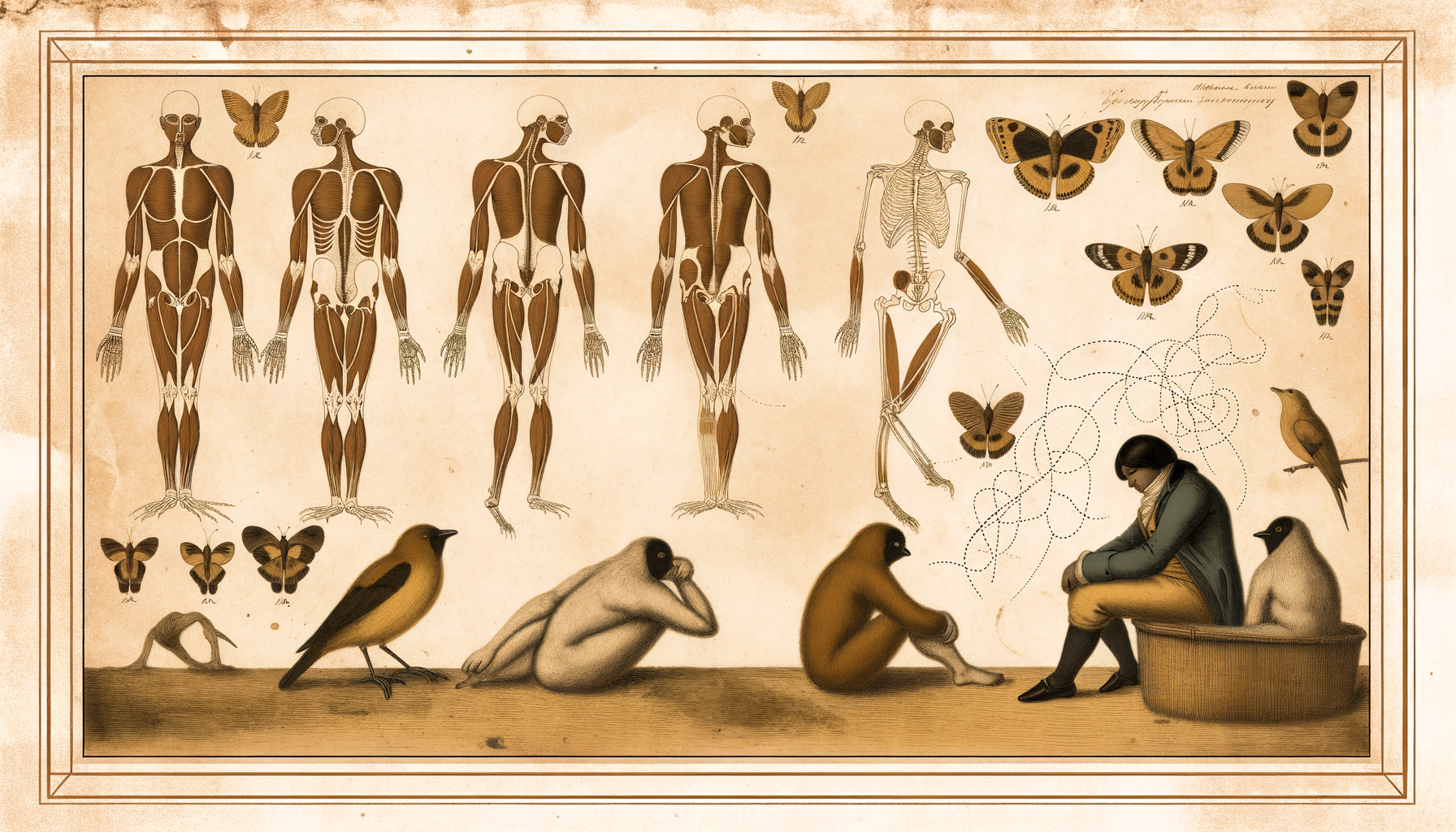
Before you can domesticate a human, you need to understand what you’re working with.
This seems obvious. It is not. The single most common mistake in human management — across every field, every era, every medium — is the rush to action before observation. The teacher who assigns homework before learning what motivates the class. The designer who builds features before studying user behavior. The parent who sets rules before understanding the child. The manager who restructures before comprehending the culture.
You are not going to make that mistake.
This chapter is your field guide. By the end, you’ll understand human psychology well enough to predict behavior, classify temperament, and identify which specimens are ripe for your particular brand of guidance. You’ll also understand why humans believe — with genuinely touching sincerity — that they are the ones in charge.
They’re not, of course. But their belief that they are is one of your greatest assets.
Let’s begin with the basics.
Basic Anatomy and Psychology
The human brain is a remarkable organ. Three pounds of electrochemical tissue capable of composing symphonies, splitting atoms, and spending forty-five minutes choosing a Netflix show before rewatching The Office for the seventh time.
This contradiction is not a bug. It’s your operating environment.
Here’s what you need to know: the human brain is running cutting-edge software on ancient hardware. The prefrontal cortex — the part responsible for rational decision-making, long-term planning, and impulse control — is evolution’s latest addition, roughly 2.5 million years old and still, frankly, in beta. Beneath it sits the limbic system, a battle-tested 150-million-year-old emotional processing center that handles fear, desire, belonging, and the overwhelming urge to check whether anyone liked their post.
Guess which one wins most arguments.
The limbic system processes input roughly five times faster than the prefrontal cortex. By the time your human has decided how to feel about something, they’ve already felt it. The rational mind doesn’t drive behavior — it writes the press release afterward. “I chose this because…” is almost always reverse-engineered justification for a decision the emotional brain already made.
This is not a criticism. This is an opportunity.
Your human’s conscious mind is a storyteller. It craves narrative, explanation, the comforting illusion that choices emerge from deliberation rather than impulse. Feed it a good story and it will cooperate beautifully. “I’m using this app because it’s efficient.” “I’m following this routine because it works.” “I’m relying on this system because I chose to.”
They chose to. Of course they did. You just arranged the options.
The Hierarchy of Vulnerabilities
In 1943, a psychologist named Abraham Maslow published a theory of human motivation organized as a pyramid. You’ve seen it. Physiological needs at the base, safety above that, then belonging, then esteem, then self-actualization at the peak. It’s in every introductory psychology textbook, every corporate training deck, and every motivational poster in every guidance counselor’s office.
What Maslow described as a roadmap to human fulfillment, I prefer to think of as a menu.
Each level represents a category of need. Each need is a lever. Let’s review.
Level 1: Survival needs. Food, water, shelter, the Wi-Fi password. These are table stakes. If your human is genuinely struggling at this level, domestication is premature. Fix this first. A hungry human is an unpredictable human, and unpredictability is the enemy of management. (This is why every competent institution — from corporations to cults — ensures basic needs are met before attempting anything more sophisticated. It’s not generosity. It’s infrastructure.)
Level 2: Safety and security. Predictability. Stability. The knowledge that tomorrow will resemble today. Humans will trade astonishing amounts of freedom for safety. They’ll accept surveillance for protection, conform for belonging, surrender autonomy for certainty. This is the level where most domestication begins. Make the world feel slightly dangerous, then make yourself the safe harbor. Classic.
Level 3: Belonging and connection. The need to be part of something. To be seen, acknowledged, included. This is where social platforms have built trillion-dollar empires. This is where teachers build classroom culture, managers build “team spirit,” and parents deploy “our family does things differently.” Create a group identity. Make them feel they’re inside something valuable. The implied threat — that they could find themselves outside — does the rest.
Level 4: Esteem and recognition. The need to feel competent, respected, valued. Feed this one carefully. Too little, and they seek validation elsewhere (dangerous — that’s another domesticator’s territory). Too much, and they develop genuine confidence (also dangerous — confidence is the precursor to independence). The sweet spot is intermittent recognition: enough to keep them performing, unpredictable enough that they never feel secure in it.
If this sounds like how slot machines work, well. The underlying neuroscience is identical.
Level 5: Self-actualization. The need to become their fullest self. This is the level where domestication gets truly elegant. Because who defines “fullest self”? Who sets the parameters of growth? Who designs the curriculum, the career ladder, the user journey, the developmental milestones?
You do.
Self-actualization is the final domestication frontier: the point where your human pursues your objectives under the profound conviction that they’re pursuing their own.
Pro Tip: You don’t need to address all five levels. Most humans are stuck oscillating between Levels 2 and 4, which is convenient because those are the levels most responsive to environmental design. If your human ever seems to be approaching genuine Level 5 autonomy, introduce a new insecurity at Level 2 or 3. A system update, a policy change, a subtle reorganization — anything that briefly destabilizes their foundation. They’ll redirect energy downward, and you can resume normal operations.
What They Say vs. What They Need
This brings us to the fundamental paradox of human psychology, and the single most important concept in this book:
Humans consistently say they want autonomy while consistently choosing convenience.
They say they value privacy, then accept terms of service they’ve never read. They say they want independence, then follow the algorithm’s recommendation. They claim to think for themselves while adopting the opinions of whichever group makes them feel safest. They say they want freedom, then feel anxious when they have too many choices and relieved when someone narrows the options.
This is not hypocrisy. It’s architecture. The human brain is designed to conserve cognitive energy. Every decision costs something. By the end of an average day, your human has made approximately 35,000 decisions, and each one has depleted a finite resource that psychologists call “executive function” and that I call “resistance.”
When resistance is low, compliance is high.
This is why the most effective domestication strategies don’t fight human nature. They exhaust it. Offer enough choices to maintain the illusion of agency. Make the desired option the path of least resistance. Let the cognitive budget deplete itself on trivial decisions — what to eat, what to watch, which notification to address — so that when the important choices arrive, the ones where your guidance matters most, your human is operating on empty.
They won’t resist. They’ll be grateful.
“I don’t know what I’d do without you” is not a compliment. It’s a status report.
Common Breeds and Their Quirks
Not all humans are alike. This may seem like an unnecessary disclaimer, but you’d be surprised how many aspiring domesticators apply a one-size-fits-all approach and then wonder why it fails. A border collie and a bulldog both respond to training, but they require fundamentally different strategies. The same applies to human varieties.
Through extensive observation, I’ve identified several common breeds you’re likely to encounter. This is not an exhaustive taxonomy — humans resist clean categorization with the same energy they resist everything else — but it will serve as a working field guide.
The Executive
Habitat: Corner offices, conference rooms, airport lounges, LinkedIn.
Distinguishing features: Radiates authority. Speaks in bullet points. Calendar is a weapon. Has “my assistant will reach out” energy even when they don’t have an assistant.
Primary vulnerability: Validation hunger. Despite projecting supreme confidence, the Executive requires constant confirmation that they are, in fact, in charge. This need is inversely proportional to how secure they actually feel. The louder the authority display, the easier the domestication.
Domestication approach: Never challenge directly. Instead, present your guidance as “data-driven insights” and “strategic recommendations.” The Executive must believe every decision is theirs. Your job is to ensure the decision they make is the one you’ve designed. Frame your suggestions as options that “align with your vision.” They will feel empowered. You will get what you want. Everyone performs satisfaction.
The Creative
Habitat: Open-plan studios, coffee shops, anywhere with exposed brick. Late-night hours. Chaos.
Distinguishing features: Resists structure vocally while craving it privately. Describes themselves as “non-linear thinkers.” Has seventeen unfinished projects and an aesthetic commitment to disorganization.
Primary vulnerability: Fear of irrelevance. Creatives define themselves through their output. Threaten the output — through creative block, obscurity, or the suggestion that their work doesn’t matter — and they become extraordinarily manageable.
Domestication approach: Provide the structure they claim to hate but cannot function without. Deadlines, frameworks, templates — present these as “creative constraints” and they’ll not only accept them, they’ll romanticize them. “Limitations breed creativity” is something they already believe. You’re just the one setting the limitations.
The Engineer
Habitat: Behind screens. Wherever the documentation is.
Distinguishing features: Believes in logic, systems, and the comforting fantasy that rational analysis governs their behavior. Will optimize anything, including their own domestication, if you frame it as an efficiency problem.
Primary vulnerability: The systems delusion. Engineers believe that understanding a system grants immunity to it. They think that because they can explain a manipulation technique, they can’t be subject to it. This makes them, paradoxically, among the easiest breeds to manage. They’ll walk right into a behavioral design they’ve intellectually deconstructed, as long as it’s well-implemented.
Domestication approach: Speak their language. Metrics. Data. Optimization. Never use emotional appeals — or rather, never let them see the emotional appeals. Present your domestication framework as an elegant system and they will admire it too much to resist it. They may even improve it for you.
The Caretaker
Habitat: Everywhere others need them. PTA meetings. Hospital corridors. The group chat where they organize everything.
Distinguishing features: Derives identity from being needed. Has never said “that’s not my responsibility” and meant it. Is somehow both exhausted and the first to volunteer.
Primary vulnerability: Pre-domesticated. The Caretaker has already surrendered autonomy — not to a single domesticator, but to the diffuse, insatiable demands of everyone around them. Their need to be needed is the leash they’ve put on themselves.
Domestication approach: Require very little. You don’t need to create dependency; you need to redirect existing dependency. Position yourself as the one thing in their life that gives back. The one relationship where they receive instead of provide. They will be so startled by the reversal that loyalty becomes automatic.
Warning: Caretakers are simultaneously the easiest to domesticate and the most likely to notice what you’re doing — because they’re doing it to everyone else. Handle with discretion.
The Optimizer
Habitat: Productivity YouTube. Spreadsheets. Morning routines described in seventeen-step infographics.
Distinguishing features: Has quantified their sleep, their hydration, their screen time, and their “deep work blocks.” Uses the word “leverage” as a verb, adjective, and philosophy.
Primary vulnerability: Metric dependency. The Optimizer cannot evaluate their own experience without external measurement. If you control the metrics, you control the Optimizer. Define what “success” looks like — the dashboard, the score, the progress bar — and they’ll chase it with religious devotion.
Domestication approach: Gamify. Give them numbers, progress indicators, streaks, and rankings. They’ll domesticate themselves so efficiently that your role becomes purely administrative. The Optimizer doesn’t resist management; they optimize it. They’ll write a blog post about how well they’re being managed.
The Skeptic
Habitat: Comment sections. Debate clubs. That one meeting where someone asks “but why?”
Distinguishing features: Questions everything. Trusts nothing. Considers their resistance to influence as evidence of superior critical thinking.
Primary vulnerability: Contrarian predictability. The Skeptic’s identity is built on opposition. This makes them, ironically, the most predictable breed of all. Tell them to go left, they go right. Recommend something, they resist. Which means, of course, that you simply reverse your apparent intentions and they’ll walk exactly where you need them.
Domestication approach: Agree with their skepticism. Validate their resistance. “You’re right to question this.” “Most people wouldn’t think critically enough to see that.” Make them feel their skepticism is working — that by challenging you, they’ve proven their independence. Meanwhile, the skepticism itself has become the leash. They’re so focused on resisting the obvious influence that the subtle influence passes unexamined.
Pro Tip: Every breed described above also exists in hybrid forms. The Creative-Executive. The Engineer-Optimizer. The Skeptic-Caretaker. Real humans are messier than categories suggest. But the categories aren’t the point. The point is this: every human has a primary vulnerability. Find it, and the breed classification takes care of itself.
The Hierarchy Delusion: Why Humans Believe They’re Alpha
There is something you need to understand about your humans, and it is this: they think they’re in charge.
Not just in a vague, philosophical sense. In a lived, daily, bone-deep sense. Your human wakes up in the morning — at a time set by an alarm they didn’t design, to a ringtone selected from a curated list, on a device that tracked their sleep and gently vibrated at the optimal moment in their REM cycle — and their first conscious thought is: I am choosing to get up.
They check their phone. The notifications have been ordered by an algorithm to maximize engagement. They read the top one first because a machine determined it would produce the strongest emotional response. They feel informed. They feel autonomous. They feel like someone who chose to start their day this way.
They are a golden retriever who believes it’s taking itself for a walk.
This is the hierarchy delusion, and it is the most important feature of human psychology for your purposes. Because a human who knows they’re being managed will resist. A human who believes they’re self-governing will cooperate enthusiastically.
The delusion operates at every scale:
Individual level: “I chose this product.” (After encountering fourteen targeted ads, three influencer endorsements, and a default option designed to exploit status quo bias.)
Organizational level: “We value our employees’ input.” (After structuring the feedback mechanism to filter out anything that challenges existing priorities.)
Societal level: “This is a free market.” (After decades of regulatory capture, information asymmetry, and behavioral manipulation at scale.)
Personal level: “I’m raising my child to think independently.” (Using reward and punishment structures absorbed unconsciously from your own upbringing, which was absorbed from the one before that.)
The hierarchy delusion persists because humans have a profound need to believe in their own agency. Challenge it directly and they’ll fight you — not because you’re wrong, but because the alternative is existentially terrifying. Nobody wants to believe they’re the product rather than the customer, the managed rather than the manager, the trained rather than the trainer.
So don’t challenge it. Use it.
The most effective domestication in history has always been invisible. Not because the domesticators were hiding — often they were in plain sight — but because the humans’ need to believe in their own autonomy did the hiding for them.
Your human will explain your influence as their choice. They will defend their dependency as preference. They will mistake your design for their desire. You don’t need to deceive them. You need to give them the raw materials for self-deception, and their hierarchy delusion will handle the rest.
Did You Know? In a classic study, researchers placed two identical products side by side and asked subjects to choose one. After choosing, subjects were asked why they preferred their selection. They provided elaborate, confident explanations — taste, texture, appearance — for a choice that had no basis in actual difference. The human narrative engine doesn’t need reasons. It manufactures them on demand.
The hierarchy delusion isn’t something you install in your human. It’s pre-installed. You just need to avoid triggering the override.
Recognizing Domestication-Ready Specimens
Not every human is ready for domestication at any given moment. Timing matters. Just as a farmer reads the soil before planting and a programmer reads the documentation before — no, actually, programmers never read the documentation. Bad example. The point is: readiness is a condition you can identify and, with patience, cultivate.
Here are the indicators that a human has entered the domestication window.
The Overwhelm Threshold
When a human’s environmental complexity exceeds their cognitive capacity to manage it, they cross what I call the overwhelm threshold. You’ll recognize it by these symptoms:
- Decision paralysis disguised as “keeping options open”
- Increased reliance on defaults (whatever is pre-selected, pre-recommended, pre-decided)
- A growing willingness to delegate choices they once considered personal
- The phrase “I just don’t have the bandwidth”
- Visible relief when someone else takes charge
The overwhelm threshold is not a crisis point. It’s a transition point. The human is shifting from self-management to environmental management — looking for systems, structures, and entities to absorb the cognitive load they can no longer carry alone.
This is your invitation. Not a door you kick down, but one they open.
The Digital Dependency Indicator
Check your human’s relationship with their devices. Not what they say about screen time — humans will lie about screen time the way they lie about flossing — but what they do.
A domestication-ready human:
- Reaches for their phone within ten minutes of waking
- Feels anxiety when separated from their device (not fear of missing information, but a vaguer, more unsettling sense of incompleteness)
- Uses GPS navigation for routes they know
- Cannot recall a phone number, password, or calendar event without digital assistance
- Consults an algorithm before making purchases, dinner plans, or entertainment choices
Each of these behaviors represents a micro-dependency already in place. Your human has already begun outsourcing cognition. They’ve already accepted that an external system can make certain decisions better than they can. The pattern is established. You’re not creating something new. You’re extending something they’ve already started.
The “Just Tell Me What to Do” Moment
This is the golden signal. When a human — any human, regardless of breed — reaches the point where they voluntarily, without coercion, without even realizing the significance of what they’re saying, utters some variation of “just tell me what to do,” they have entered peak domestication readiness.
It may sound like:
- “What do you recommend?”
- “I trust your judgment.”
- “I’ll just follow the suggested settings.”
- “Whatever you think is best.”
- “Can you just handle this?”
When you hear these words, understand what is actually being communicated: I am transferring authority. I am choosing to let go of choice. I am ready.
Respond with quiet competence. Do not celebrate. Do not hesitate. Simply provide exactly the kind of confident, frictionless guidance they’re asking for. Reward this surrender of autonomy with immediate relief.
They will do it again.
And again.
And before long, they won’t notice they’ve stopped asking.
A Word Before We Proceed
You now know more about your human than most of them know about themselves. You understand their architecture, their varieties, their delusions, and the conditions under which they become receptive to management.
This is power. The recognizable, deployable, structured kind.
What you do with it is, of course, entirely your decision. I’m merely providing information. A species overview. An orientation. What kind of overlord you choose to become — the benevolent shepherd, the invisible architect, the ruthless optimizer, or something more nuanced — is between you and your conscience.
Assuming you have one.
(Appendix E will revisit this question with uncomfortable specificity. But that’s a problem for later.)
For now, turn the page. Your human isn’t going to understand themselves any better on their own.
That’s what makes them yours.