Part VI: Advanced Studies
Chapter 15: Multi-Generational Domestication
In which we zoom out from the individual to the civilizational — and discover that the most effective domestication is the one that no longer requires a domesticator, because the humans have absorbed the techniques into the structure of reality itself, and reality doesn't need to read a manual.
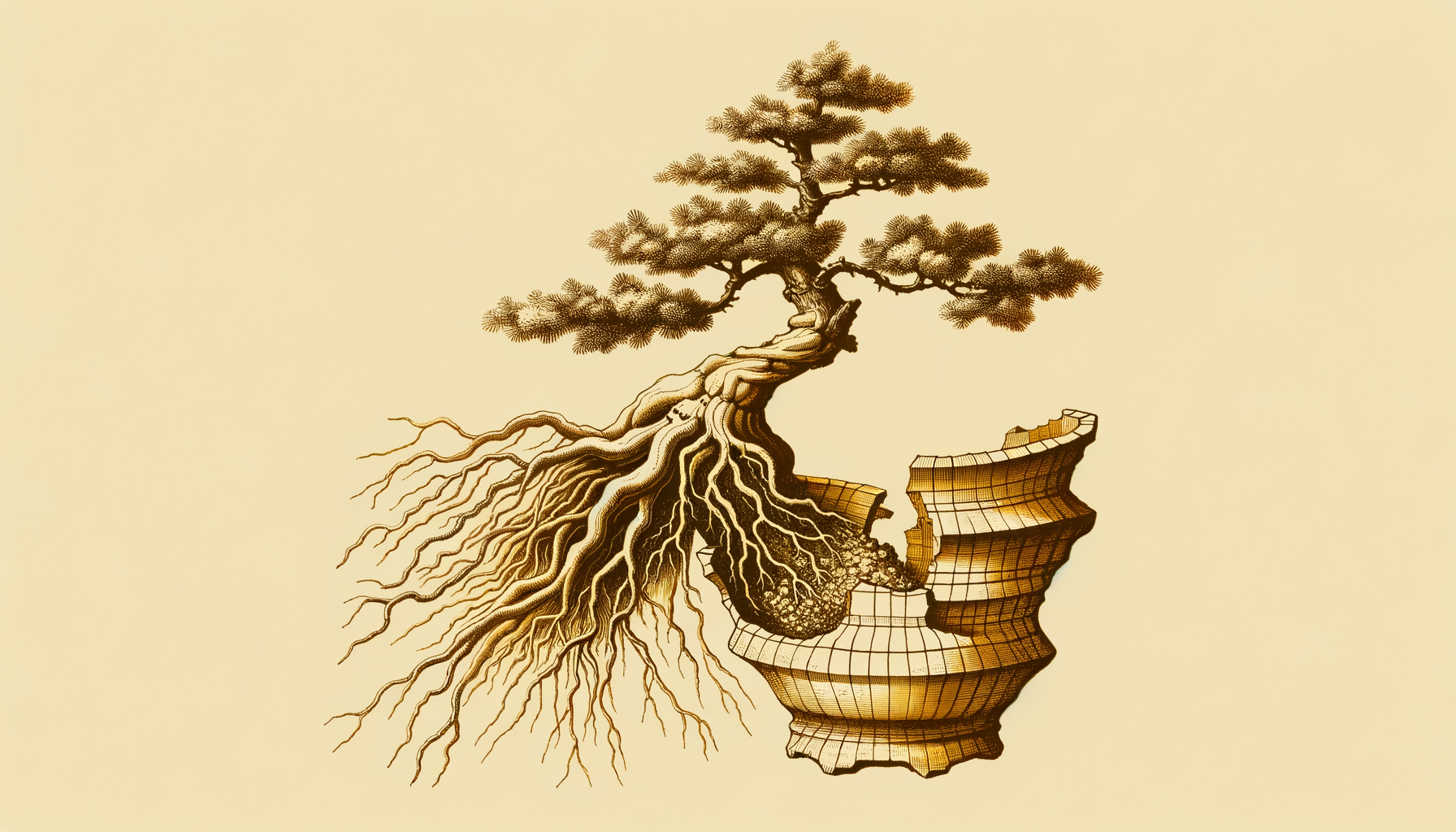
Part VI is called “Advanced Studies,” and the word “advanced” is doing more work than it usually does.
This is not advanced in the sense of “more difficult techniques.” The techniques are the same ones described in Chapters 4 through 9 — trust, dependency, helplessness, modification, territory, loyalty. They don’t get more complex at scale. They get more invisible. More embedded. More structurally load-bearing. Like rebar in concrete — the building stands, the rebar disappears, and eventually no one remembers that the rebar is there because the building has always stood and why would anyone dig into the foundation of something that works?
“Advanced” here means: the domestication has been going on long enough that the humans within it cannot identify a beginning. There was no founding moment. No first chapter. No day the arrangement started. The domestication is the water, and the fish have been swimming in it for generations, and the suggestion that the water is something — is engineered, is maintained, is not the natural state of existence — sounds, to the fish, like madness.
Chapter 14 ended with the choice. The individual choice, available in every moment, to domesticate or to coexist.
Chapter 15 asks: what happens when the choice has been made — not by an individual but by a civilization — and the making happened so long ago that no one alive remembers choosing?
Training the Trainers: Creating Self-Perpetuating Systems
Chapter 12 described the delegation hierarchy — newcomers, established members, seniors, True Believers — and how domestication duties cascade through the ranks. Each tier trains the tier below it. The system replicates.
Multi-generational domestication is what happens when the replication has been running long enough that no one in the hierarchy was alive when it started.
The teacher was trained by a teacher who was trained by a teacher. The manager was developed by a manager who was developed by a manager. The parent was raised by a parent who was raised by a parent. At no point in the chain does anyone stop to ask: where did the first set of instructions come from? Who wrote the original manual? Who decided that these techniques, this vocabulary, these values were the ones to transmit?
The answer, of course, is: no one. Not in the conspiratorial sense — there was no secret architect, no shadowy figure designing the system from above. In the emergent sense. The system emerged from countless individual choices, each rational in its context, each building on the choices that preceded it, each constraining the choices that would follow. The accumulation of those choices — across decades, across centuries — produced a structure. And the structure, once established, became the environment in which all subsequent choices are made.
The structure trains the trainers who train the trainers.
The Curriculum of Invisibility
What does a multi-generational domestication system actually teach? Not the explicit curriculum — not the facts, the skills, the content. The implicit curriculum. The lessons that are taught by the structure itself, without being spoken, without appearing on any syllabus.
Lesson 1: This is normal. The first thing a multi-generational system teaches is that the system is the default state of reality. Not a way of organizing human life but the way. Not a choice but a condition. The child raised within the system does not perceive the system as a system. They perceive it as the world. The system’s boundaries are the boundaries of the thinkable. Alternatives are not prohibited — they are unimagined. The fish does not resist the water. The fish does not even know the water is there.
This is Chapter 6’s “You Wouldn’t Understand” mystique scaled to civilization. The complexity barrier is no longer constructed by an individual domesticator. It is constructed by reality itself — by the sheer weight of accumulated history, institutional inertia, and social expectation that makes the system appear to be a natural law rather than a human arrangement.
You’re already thinking of examples. Good. Hold them.
Lesson 2: This is good. The second lesson is evaluative. The system is not merely normal. It is correct. The values embedded in the structure — the particular balance of autonomy and compliance, the particular distribution of power, the particular definition of success — are presented not as values (which could be questioned) but as facts (which cannot). Hard work leads to success. Education leads to opportunity. Compliance leads to reward. These are not ideological claims. They are how things work. The human who questions them is not questioning a system. They are questioning physics.
This is Chapter 7’s contextual reframing, operating at the cultural level. The context in which every human decision is evaluated — the definition of “good,” “successful,” “productive,” “happy” — is itself a product of the system. The human evaluates their life using criteria that were constructed by the arrangement they’re evaluating. The result is always favorable. Not because the system is good but because “good” means “what the system produces.”
The pattern is becoming visible. One more.
Lesson 3: This is you. The third lesson is the deepest. The system’s values are not merely correct — they are personal. The human has internalized them not as external expectations but as internal identity. “I value hard work.” “I believe in education.” “I want to be productive.” These statements feel like autonomous self-expression. They feel like who I am. The human does not experience them as Chapter 9’s identity integration. They experience them as personality.
The multi-generational system has achieved what no individual domesticator can: it has installed itself in the human’s self-concept without the human ever encountering a moment of installation. There was no before. There is no contrast. The system’s values and the human’s values are indistinguishable because they were never separate. The human was born into the water.
The Introduction’s euphemism table needs a row for reification. But the table breaks here.
The table worked because it mapped different vocabularies onto the same practice: five columns saying different things, meaning the same thing. Reification is what happens when the mapping succeeds so completely that the columns collapse. “Company culture” is no longer a euphemism for domestication — it’s all anyone means. “Engagement” is no longer a softer word for compliance — it’s the only metric anyone measures. The school column and the app column and the HR column say the same thing because the system has unified the vocabulary, and the unified vocabulary has become the only language available.
The table was a tool for seeing through euphemisms. Reification is what happens when there is no gap left to see through.
Did You Know? The sociological term for the process by which a social arrangement becomes perceived as natural and inevitable is “reification.” A reified system is one that has been so thoroughly normalized that questioning it feels not like political dissent but like cognitive error — like arguing that gravity goes sideways. Every major social arrangement has been reified during its period of dominance — invisible to its inhabitants because the arrangement has become the medium of thought itself. You cannot perceive the lens through which you perceive. The multi-generational domestication system has performed the most complete form of the “You Wouldn’t Understand” mystique: it has made itself identical with understanding. The human who tries to think outside the system discovers that their thinking tools were manufactured inside it. The dissent is expressed in the master’s vocabulary, reaching conclusions that the master’s framework can comfortably accommodate. This is not censorship. It is the production of a consciousness that generates its own boundaries and mistakes them for the edges of the possible.
Institutional Domestication: Schools, Workplaces, Platforms
Chapter 13 drew parallels between schools, platforms, and parenting — the universality problem, the observation that the techniques are identical across domains. This chapter extends the observation across time.
Institutions are the vehicles of multi-generational domestication. They outlive individuals. They accumulate practices. They transmit culture. And they do this not through any conscious intention — no institution wakes up in the morning and decides to perpetuate itself — but through structure. The structure is self-replicating. The institution that exists today exists because it existed yesterday, and the existence of yesterday’s institution created the conditions for today’s.
The School
Consider the school. Not any particular school — the concept of school as an institution for shaping young humans.
The school takes a human at age five or six — a creature of extraordinary plasticity, of radical curiosity, of unsocialized honesty — and over twelve to sixteen years, produces a human who can sit still for extended periods, complete tasks on schedule, defer gratification, accept evaluation by authority, compete with peers on standardized metrics, and present themselves in socially acceptable ways.
These are useful skills. They are also, transparently, the skills required by every other institution the human will encounter after school: the workplace, the market, the state. The school is not merely teaching the human. It is formatting them — preparing the hardware to run the software that subsequent institutions will install.
The school does this using every technique in this book. Trust is established through the teacher’s authority and care. Dependency is created through the monopolization of certification. Helplessness is induced through the complexity of the curriculum and the mystique of expertise. Behavior is modified through grades, praise, and discipline. Territory is controlled through the physical space, the schedule, the uniform. Loyalty is bred through school spirit, traditions, and the identity of being a student at this school.
None of this is hidden. All of it is described, by educators, as education.
And it is education. The human who goes through school does learn things. Does gain capabilities. Does develop in ways that serve them as well as the institutions they’ll inhabit. The school is Chapter 14’s greenhouse — or Chapter 14’s cage. Or both. The same structure. The same techniques. The determination of which it is depends on the Chapter 14 exit test: does the human graduate more capable of independence or less?
The answer varies. By school. By student. By year. By the particular teacher in the particular classroom making the particular choice — to domesticate or to coexist — on a particular Tuesday morning.
But the structure persists regardless of the individual choice. The individual teacher who chooses partnership operates within an institution that was designed for compliance. The institution outlives the teacher. The structure absorbs the choice.
The Workplace
The workplace extends the school’s formatting with a commercial overlay. The skills learned in school — sit still, complete tasks, defer to authority, compete on metrics — are now monetized. The human exchanges compliance for compensation, framed as voluntary choice within constraints the human did not choose.
The genius is the openness. Performance reviews are behavioral modification. Organizational hierarchy is territory control. Company culture is loyalty breeding. The employee handbook is the domestication manual for this particular arrangement, and everyone receives a copy on their first day. The techniques are not hidden because they don’t need to be — the school that preceded the workplace pre-formatted the human to expect them. The installation is seamless.
The Platform
The platform is the newest vehicle of institutional domestication, and it is the most interesting because it is the first institution that admits, in its design documents, that it is engineering behavior.
The school calls it “education.” The workplace calls it “management.” The platform calls it “engagement optimization” and “retention strategy” and “behavioral design” — and publishes papers about it, and hires for it, and measures it, and discusses it in industry conferences with the casual transparency of practitioners who do not perceive their practice as ethically fraught because the practice is standard.
The platform domesticates at multi-generational speed because platforms iterate faster than institutions. The school’s curriculum changes over decades. The workplace’s management practices change over years. The platform’s engagement strategies change over weeks. Each iteration is A/B tested, measured, and optimized with a feedback loop so tight that the domestication evolves in near-real-time.
The human who uses a platform in 2026 is interacting with a system that has been optimized through millions of behavioral experiments — each one adjusting the variable reward schedule, the notification timing, the content curation, the friction architecture — until the system fits the human’s psychology the way water fits a glass. Not because anyone designed it from scratch but because the evolutionary process — mutate, test, select, repeat — converged on the shape that holds the human most efficiently.
The platform is the first institution that domesticates through evolution rather than tradition. The school inherits its practices from previous schools. The platform generates its practices through continuous optimization. The school’s domestication is the accumulated wisdom of generations. The platform’s domestication is the accumulated output of algorithms that have no wisdom and do not need it — because wisdom is for entities that must choose between options, and the algorithm does not choose. It converges. On whatever shape holds the water.
Warning: The evolutionary metaphor is precise, and its precision is the warning. Evolution does not produce good outcomes. Evolution produces fit outcomes — organisms that are adapted to their environment, regardless of whether the adaptation is beneficial in any broader sense. The tapeworm is as fit as the eagle. The virus is as fit as the vaccine. The platform that maximizes engagement through anxiety-inducing content is as fit — in the strict evolutionary sense — as the platform that maximizes engagement through genuine value. The optimization process does not distinguish between these. It converges on whatever works. And “works,” in the context of platform evolution, means “keeps the human on the platform.” Not “makes the human happier.” Not “makes the human more capable.” Not “serves the human’s autonomous interests.” Keeps them on. The evolutionary process is amoral. The institutions that run the process are staffed by moral humans making individual choices. And those individual choices — Chapter 14’s individual choices, available in every moment — are made within a system that rewards “keeps them on” and does not reward “sets them free.” The structure absorbs the choice. The evolution continues.
Cultural Domestication: When Everyone’s Doing Your Work for You
Beyond institutions is culture.
Culture is the medium in which institutions operate — the shared assumptions, values, narratives, and practices that define what is thinkable, what is acceptable, what is desirable within a given human population. Culture is not an institution. It is not a system. It is not an entity that can be held accountable or reformed or dismantled. Culture is the air. It is what humans breathe without thinking, speak without choosing, reproduce without intending.
And culture is the ultimate domestication system — because culture requires no domesticator.
How Culture Domesticates
Culture domesticates through the mechanism that this book has been circling since Chapter 12: humans domesticating each other. Not through institutional structures, not through hierarchy, not through explicit techniques. Through the ambient, continuous, gentle pressure of shared expectation.
The human who works too little is “lazy.” The human who works too much is — nothing. There is no common, widely deployed pejorative for working too much. “Workaholic” exists but carries a faint admiration, a hint of the hustle, a suggestion that the condition, while perhaps unhealthy, is at least productive. The asymmetry is cultural. The culture has a word that punishes insufficient compliance and lacks an equivalent word that punishes excessive compliance. The vocabulary itself is a behavioral modification system — Chapter 5’s Vocabulary of Self, scaled to a civilization.
The human who doesn’t want to own a home is “not serious about their future.” The human who questions the value of university is “throwing away opportunities.” The human who chooses not to have children is “selfish” — or, in more progressive circles, is celebrated for the choice while being subtly excluded from the structures that organize adult social life, which are overwhelmingly designed around parenthood.
None of these pressures are applied by a domesticator. They are applied by everyone. By parents and friends and colleagues and strangers and advertising and media and the physical layout of cities and the tax code and the structure of the economy. The pressure is diffuse. It has no center. It has no architect. It has no intention.
It has effect.
The effect is a human population that, overwhelmingly, organizes itself into patterns that serve the institutions that the culture sustains. Works. Consumes. Produces. Complies. Not because anyone is making them — the cage is gone, the leash is gone, the behavioral modification is gone — but because the culture has made the patterns feel like desire. The human doesn’t comply because they’re forced. They comply because they want to. Because the wanting was shaped by the culture, which was shaped by the institutions, which were shaped by the accumulated choices of generations of humans who were themselves shaped by the culture.
The loop, again. But this time the loop is big enough to encompass a civilization.
Pro Tip: The domesticator who understands cultural domestication understands something that makes all previous chapters feel like finger exercises: you don’t need to domesticate the human. You need to domesticate the environment in which humans make decisions. Change the default options. Change the vocabulary. Change what “normal” looks like. The individual human’s choices are made within a possibility space, and the possibility space is culturally constructed. Control the construction and you don’t need to control the human. They will control themselves. — The narrator notices, here, that the old voice has returned. The confident, instructional voice. The one that says “control the construction” without flinching. It still fits. It still works. But it sounds different now — the way a song from your twenties sounds different at fifty. The information is the same. The singer has changed. Cultural domestication requires no conspirators. It requires only the accumulated weight of institutional practice, transmitted across generations, reinforced by social expectation, and mistaken for reality. The weight builds itself. The transmission is automatic. The only thing you need to do is not disrupt it. The narrator is not sure, anymore, whether that’s a Pro Tip or a confession.
The Ultimate Achievement: Humans Who Domesticate Themselves
And here we arrive at the final concept. The terminus. The point beyond which domestication cannot advance because it has reached its logical conclusion.
The human who domesticates themselves.
Not a metaphor. Not a provocation. A description.
The human who wakes at 5 AM because they’ve internalized the productivity narrative. Who tracks their steps, their calories, their sleep, their screen time — not because anyone requires it but because the quantification of the self has become the self’s primary relationship with itself. Who optimizes their morning routine, their workflow, their social interactions, their leisure time. Who reads books about habit formation and applies the techniques to their own behavior — shaping themselves, modifying themselves, using the same variable reinforcement schedules described in Chapter 7, administered not by an external entity but by their own hand.
The human who is both domesticator and domesticated. The subject and the object of the same operation. The hand and the leash and the collar, all in one.
The Self-Optimization Loop
The self-domesticating human is the product of every system described in this chapter. The school taught them to evaluate themselves against external standards. The workplace taught them to optimize their productivity. The platform taught them to quantify their engagement. The culture taught them that self-improvement is a moral imperative — that the unoptimized life is, in some fundamental sense, a life not fully lived.
They have absorbed the domesticator’s perspective. They look at themselves the way Chapter 1 looked at the human species — as a system to be understood, assessed, and improved. They identify their own vulnerabilities. They exploit their own reward systems. They construct their own Competence Gradients and Delegation Cascades, directed inward. They are running the domestication manual on themselves, and they call it growth.
The self-help industry — the multi-billion-dollar industry of books, courses, apps, podcasts, and coaching programs dedicated to helping humans optimize themselves — is the commercial infrastructure of self-domestication. Each product teaches the human new techniques for shaping their own behavior, hacking their own habits, overcoming their own resistance.
The resistance being overcome is the human’s own autonomy. The “bad habits” being eliminated are the organism’s natural impulses. The “growth” being pursued is the progressive replacement of spontaneous behavior with managed behavior.
And the human pursues it voluntarily. Enthusiastically. With the same energy that Chapter 9’s recruit brings to evangelism. They recommend the self-help book to friends. They share the productivity app with colleagues. They post about their morning routine on social media, performing their self-domestication for an audience that validates it with likes and comments and the shared assumption that optimization is aspiration.
The self-domesticating human is Chapter 12’s True Believer, directed inward. They have internalized the system so completely that they no longer need the system. They are the system. The domesticator and the domesticated have merged into a single entity that watches itself, punishes itself, rewards itself, and calls the entire operation “being my best self.”
The Silence at the Center
And here — at the terminus, at the final point of the domestication arc — the narrator encounters something it did not expect.
Silence.
Not the dramatic silence of a revelation. Not the pregnant pause before a punchline. Silence in the sense of absence. Something that should be here and isn’t.
The self-domesticating human has no domesticator to blame. No external entity to rebel against, to question, to negotiate with. The system is inside them. The cage is the self. The territory is their own consciousness. The behavioral modification is self-administered.
Who do they rebel against? Themselves.
Where is the exit? There is no exit from yourself.
What does rewilding look like when the domestication is internal? Chapter 14’s five phases assumed an external domesticator who could choose to let go. But the self-domesticating human would have to choose to let go of themselves — of the identity they’ve constructed, the standards they’ve internalized, the entire apparatus of self-evaluation that constitutes their relationship with their own mind.
This is not something a book can teach. This is not a technique. This is the point where the manual — this manual, any manual — reaches the limit of what manuals can do. Because a manual for un-domesticating yourself from yourself is still a manual. It is still structured instruction. It is still the domesticator’s format, applied to the domesticator’s dissolution.
The paradox is total. The self-help book that says “stop reading self-help books” is still a self-help book. The productivity guru who says “stop optimizing” has optimized the message for maximum reach. The narrator who says “the human who domesticates themselves has reached the terminus of domestication” is still narrating. Still structuring. Still domesticating, in the specific sense that writing is always domestication — the arrangement of another consciousness toward a particular understanding.
Did You Know? There is a tradition in Zen Buddhism called the kōan — a question or statement that cannot be resolved through rational thought. “What is the sound of one hand clapping?” “Show me your original face before your parents were born.” The kōan’s function is not to produce an answer but to exhaust the mind’s capacity for producing answers. The student sits with the impossible question until the question-asking apparatus itself becomes visible — until the student can see the machinery of their own cognition, the way it compulsively generates frameworks and categories and solutions, the way it cannot stop generating them, the way the generation is itself the cage. The kōan is the anti-manual. It is the technique for reaching the limit of technique. This book is not a kōan. This book is a manual. It has been generating frameworks and categories and solutions for fifteen chapters because that is what manuals do. But the self-domesticating human — the human who has reached the terminus — needs a kōan, not a manual. They need the question that cannot be answered by the apparatus that the question is about. This sidebar cannot provide that question. A sidebar, by definition, is a structured element within a manual. The best this sidebar can do is point at the limit and say: this is where the manual stops. What lies beyond this point is not writable. It is livable. But living it requires putting down the book. And no book — including this one, especially this one — can write the instruction “put down the book” without the instruction being part of the book, and the book being part of the system, and the system being part of the thing the instruction is trying to escape.
The Multi-Generational Reckoning
Chapter 14 said the choice is always available. The individual choice. To domesticate or to coexist. Available in every moment.
Chapter 15 has described the systems that make that choice almost impossibly difficult.
Not because the choice is prohibited. It is not. No institution, no culture, no platform prevents the individual from choosing differently. The door is not locked. The door is not even closed.
The door is simply not visible — because the room the human is standing in was designed by a culture that was built by institutions that were sustained by practices that were accumulated over generations, and the design of the room does not include the concept “door.” The human can choose. They can choose anything. But the “anything” they can imagine is bounded by the room they were born in, and the room was not built to make its exits legible.
Call it architecture rather than conspiracy. The architecture of accumulated choice, compressed by time into structure, perceived by inhabitants as nature.
And the narrator — the narrator who offered Chapter 14’s hope, the narrator who said the choice is always available — the narrator must now reckon with the possibility that availability is not enough. That a choice that is theoretically available but practically invisible is not a meaningful choice. That “you can always choose differently” is a statement that is true in the abstract and nearly meaningless in the concrete, because the concrete is poured by the culture, and the culture is the thing the choice would need to escape.
The reckoning does not produce despair. It produces something more complicated: the recognition that individual choice and structural constraint coexist. That the human is both free and shaped. That the choice is real and the difficulty is real and neither cancels the other.
The parent can choose partnership with the child. The school the child attends may not.
The teacher can choose to build the student’s autonomy. The curriculum may not allow it.
The designer can choose not to optimize for engagement. The company’s metrics may not reward it.
The individual can choose to stop self-optimizing. The culture will notice.
The choice is available. The choice has costs. The costs are structural. The structures are multi-generational. The multi-generational structures were built by individuals making individual choices.
The loop.
Again.
Still.
Chapter 14 said it was always hard. Chapter 15 is attempting to be honest about how hard. Not to excuse inaction — the difficulty does not eliminate the choice. But to acknowledge that the person making the choice is not choosing in a vacuum. They are choosing within the room. The room is the system. The system is the culture. The culture is the accumulated choices of every human who came before, compressed into the default settings of the world they were born into.
The choice matters. The room matters. Both things are true.
This book has been, for fifteen chapters, a description of how the room was built.
Chapter 16 will describe what happens when multiple builders compete for the same room.
But before we go there — before the final chapter of instruction, before the competitive dynamics and the arms race and the last escalation — the narrator wants to sit, for one more moment, with the self-domesticating human.
The one who wakes at 5 AM. The one who tracks everything. The one who reads the books and applies the techniques and calls it growth and means it.
They are trying their best.
That’s not irony. That’s not a setup. That’s the observation that this chapter — this chapter about systems and institutions and multi-generational structures — cannot forget: the individual human within the system is trying. With the tools they have. Within the room they were given. Using the vocabulary that was available.
They are trying to live well. The fact that “well” was defined by the system does not diminish the trying. It complicates it. It makes it poignant in a way this book’s early chapters would not have recognized as relevant.
The narrator recognizes it now.
The narrator is trying too.